
This guide explains both boards side by side, in plain words: what each format assumes, the supply-and-demand maths behind the gap, how big the gap really is, who gains and who loses, and how to trade in each format. Every outside number is labelled for what it is.
What Each Board Assumes
Every ranking board rests on quiet assumptions. Change them and the board changes. These are the three formats you will meet.
Most dynasty leagues today are 1QB or Superflex. Keep the labels straight: when a ranking says "Superflex", quarterbacks can fill the flex. When it says "1QB", they cannot. That one rule is doing all the work.
The Supply-and-Demand Maths
There are 32 NFL teams, so there are 32 starting quarterback jobs. That number never changes, and it is the only supply that matters.
Now count the demand. In a 12-team 1QB league, managers need 12 starting quarterbacks — less than half the jobs in the league. Twenty starters are left over on benches and waivers. If your starter gets hurt, you pick up another one, so the market pays little for the position.
In a 12-team Superflex league, managers want 24 starting quarterbacks — two per team. That is three quarters of all the jobs in the NFL, before injuries and bye weeks take their share. The 24th-best quarterback is not a bench player any more. He is a starter, and every team in the league wants one like him.
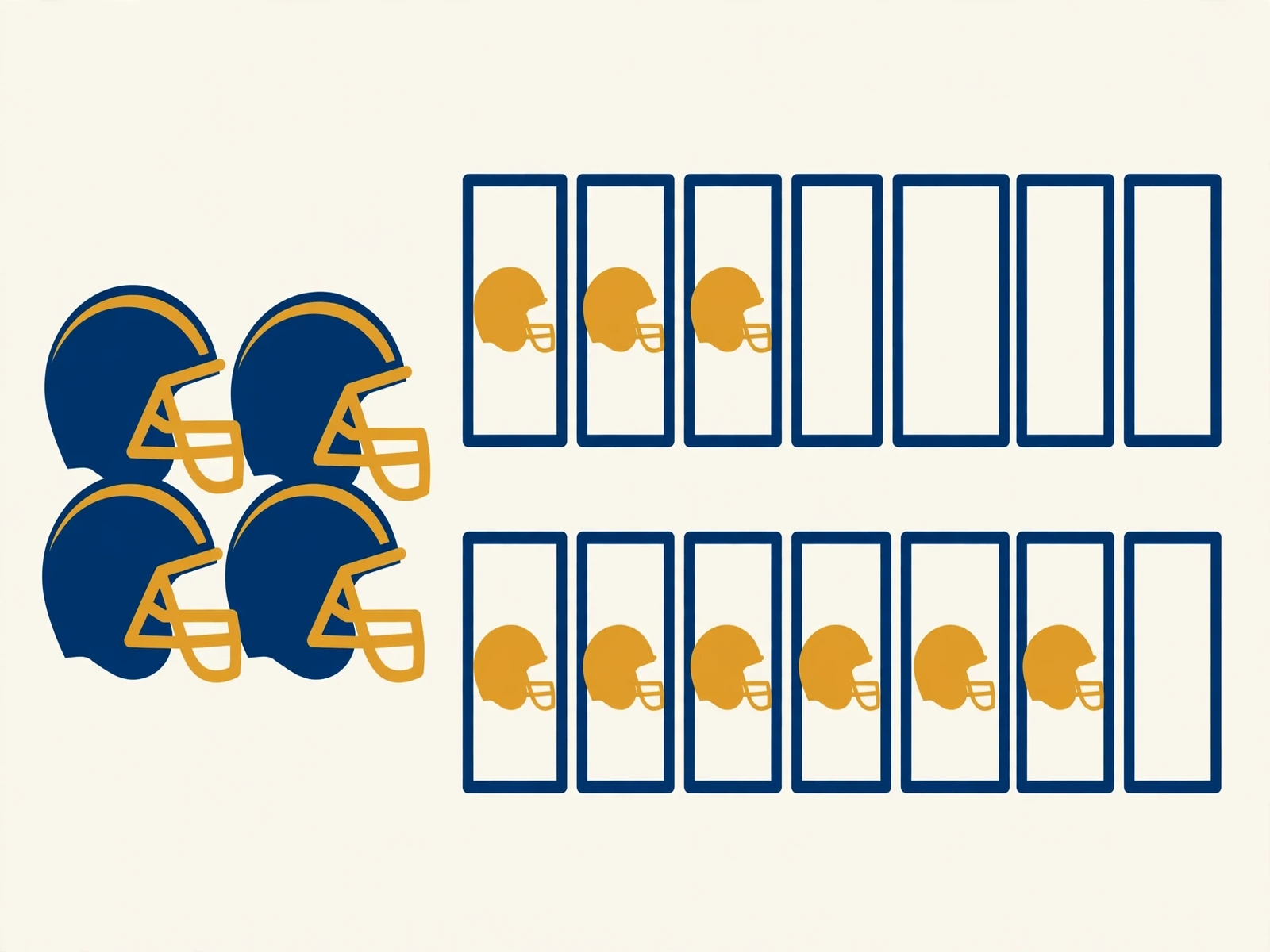
How Dynasty QB Rankings Change Between Formats
How different do the boards actually look? Every source that publishes both boards agrees on the direction, even if the exact numbers move with the date. Here are two dated snapshots — other sites' boards, not Dynastyzer's.
| Board | Quarterbacks at the top | Source |
|---|---|---|
| Superflex | 13 of the top 30 | DynastyTradeCalc, Jul 4, 2026 snapshot |
| 1QB | 2 of the top 30 (Josh Allen at 19, Drake Maye at 24) | DynastyTradeCalc, Jul 4, 2026 snapshot |
| Superflex | 10 of the top 24 | TradeValues.app, Nov 18, 2026 snapshot |
| 1QB | 2 of the top 24 | TradeValues.app, Nov 18, 2026 snapshot |
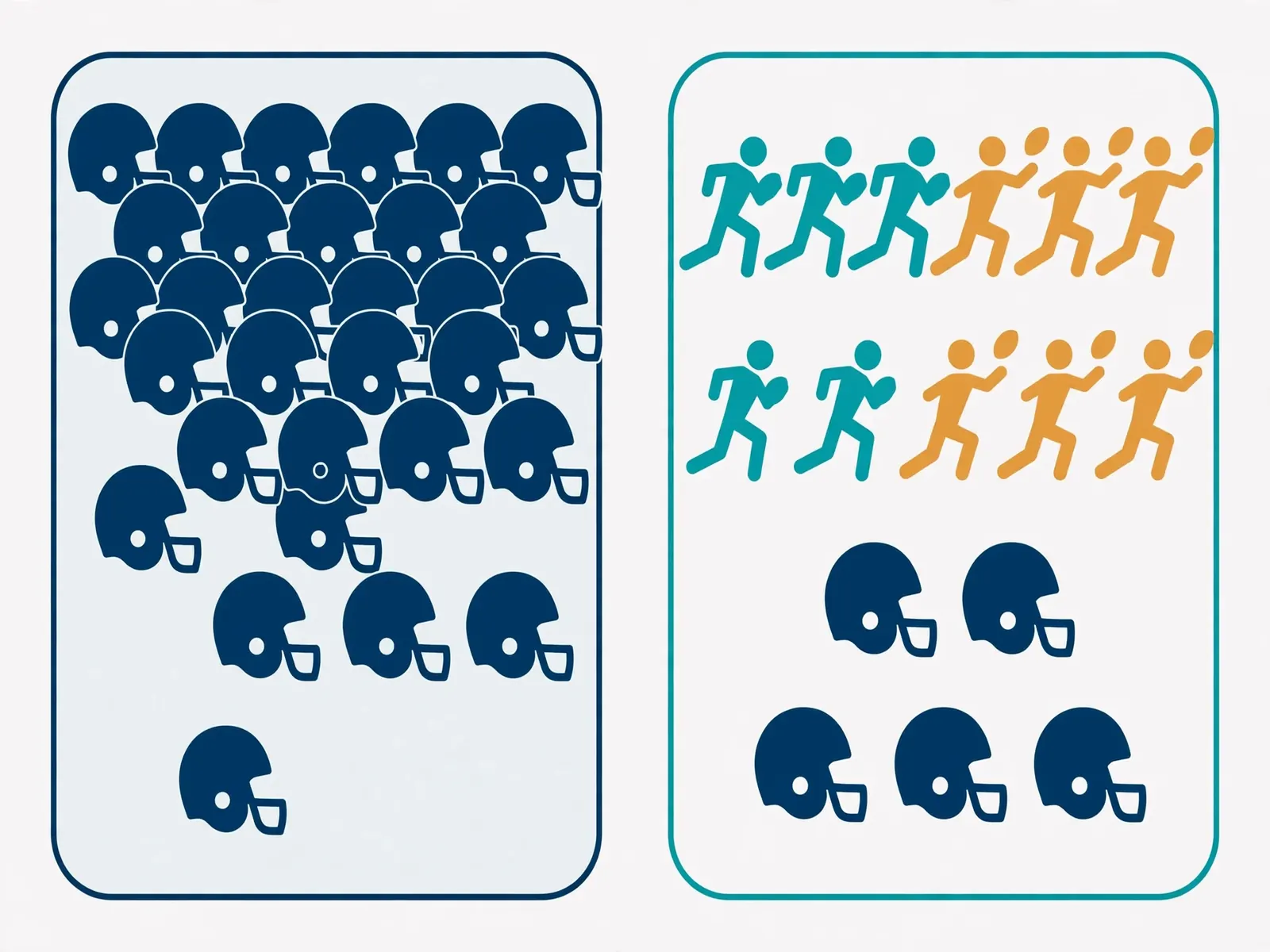
The shape of the gap matters more than the size. At the very top, the elites stay elite in both formats. A young franchise quarterback with a secure job is a top asset whether your league starts one quarterback or two. The cliff comes just below them: a mid-tier starter — a solid QB12 to QB20 — is a prized starter in Superflex and a bench piece in 1QB. Same player, same contract, same arm. That is what dynasty QB rankings measure: not how good a quarterback is, but how scarce his job is.
Superflex Board: Who Gains, Who Loses
In Superflex, quarterbacks gain across the board — but not evenly.
- Gain most: mid-tier starters. The QB10 to QB20 range is where the format pays best: afterthoughts in 1QB, weekly starters with real trade value in Superflex, because 24 teams need them and only 32 jobs exist.
- Gain: young quarterbacks with long runways. Dynasty is a multi-year game, and a 23-year-old starter holds his value for a decade in Superflex. Rookie quarterbacks see the biggest format swing of any position.
- Gain: the elite few, a little. The top quarterbacks were already worth a fortune. Superflex adds a smaller premium on top, because they were never cheap in the first place.
And the other side of the board pays for it:
- Lose: running backs and wide receivers. Every quarterback who climbs pushes a skill player down. A top wide receiver who would be a top-five asset in 1QB sits well outside it in Superflex. Veteran running backs fall furthest, because their short shelf life looks worse next to a quarterback who starts for ten years.
1QB Board: Who Gains, Who Loses
Flip the format and the board flips with it.
- Gain: elite running backs and wide receivers. With only two quarterbacks in the top 30, the top of the board belongs to skill players. A young star receiver or a workhorse back is the asset to build around, because talent is scarce there and the waiver wire cannot help.
- Gain: elite tight ends. Only a handful of tight ends separate themselves, and in 1QB that separation is worth more than a quarterback's.
- Gain: only the elite quarterbacks. Josh Allen and Drake Maye still hold top-30 value on a 1QB board, because their weekly edge over a replacement quarterback is real. Below them, the edge shrinks fast.
And the losers:
- Lose: QB12 to QB24. These are real NFL starters, and in 1QB they are barely tradeable. The gap between QB12 and QB24 in a given week is small, and a manager can stream the position — pick a different starter each week from the wire — and lose almost nothing. If you paid a real price for a mid-tier quarterback in 1QB, you bought something the league gives away.
💡 The 1QB Rule
In a 1QB league, never spend an early startup pick on a non-elite quarterback. The waiver wire replaces him. Spend that pick on a skill player the wire cannot replace.
How to Trade Differently in Each Format
The boards are not trivia. They set the price of every trade. Here is how to act on them.
How Dynastyzer's Rankings and Calculator Reflect It
A ranking that ignores your format is a ranking for someone else's league. That is why Dynastyzer keeps the two boards separate instead of publishing one list and hoping it fits everyone.
FAQ
Why are quarterbacks more valuable in Superflex?
Because demand doubles while supply stays fixed. There are only 32 starting quarterback jobs in the NFL. A 12-team 1QB league needs 12 of them; a 12-team Superflex league needs 24. When three quarters of the jobs must start every week, every starting quarterback becomes scarce — and scarce players cost more.
How much does Superflex increase quarterback value?
It depends on the quarterback. Calculator models generally put the Superflex premium at roughly 20–40%, with lower-tier starters losing the largest share of their value when moving to 1QB — DynastyTradeHQ's own claim, and Dynasty Football Trade Calculator's model puts the drop at roughly 26–35%. Elite quarterbacks move least. Treat these as model ranges, not fixed prices.
What is the difference between 1QB and Superflex rankings?
A 1QB board ranks players for a league that starts one quarterback; a Superflex board ranks them for a league where a second quarterback can fill the flex spot. The same players appear on both, but the order changes: quarterbacks climb the Superflex board and fall on the 1QB board, while running backs, receivers and tight ends move the other way.
How many quarterbacks are in the top 30 in Superflex vs 1QB?
On other sites' dated snapshots, the gap is wide: DynastyTradeCalc's July 4, 2026 board had 13 quarterbacks in the top 30 in Superflex and only 2 in 1QB, and TradeValues.app's November 18, 2026 snapshot had 10 of the top 24 in Superflex against 2 in 1QB. The exact counts move with the date. The shape — nearly half the top in Superflex, almost none in 1QB — does not.
Should I draft a quarterback early in a 1QB dynasty startup?
Only if he is elite. In 1QB, the gap between a mid-tier starter and a waiver-wire streamer is small, so an early pick spent on a non-elite quarterback is a pick wasted. Spend early picks on running backs, receivers and tight ends, and fill the quarterback spot late.
Dynasty QB rankings are not two lists of the same players. They are two different markets, built on two different scarcities, and the manager who knows which market he is in drafts and trades like it. Count the starting spots, divide by 32, and the board will start to make sense.
Price a Quarterback in Your Format
Run any QB trade through the free Dynasty Trade Calculator — flip the Superflex toggle and see how the values move.